
Mfantsipim: The Definitive Story, From Its First African Headmaster.
Mfantsipim: The Definitive Story, From Its First African Headmaster.
Mfantsipim: The Definitive Story, From Its First African Headmaster.

About the Author
About the Author
About the Author

Francis Lodowic Bartels, OBE, BA, MA, LLD (Honoris Causa) was the first African to be appointed as Headmaster of Mfantsipim School or any secondary school in the Gold Coast/Ghana. For nearly three decades, Bartels was closely involved in the development and administration of Mfantsipim School.
Francis Lodowic Bartels, OBE, BA, MA, LLD (Honoris Causa) was the first African to be appointed as Headmaster of Mfantsipim School or any secondary school in the Gold Coast/Ghana. For nearly three decades, Bartels was closely involved in the development and administration of Mfantsipim School.
He co-founded the Conference of Heads of Assisted Secondary Schools (CHASS) which provided a forum for Principals and Heads of Secondary Schools in Ghana in the 1950s to discuss and exchange ideas and experiences in the administration of secondary schools at the time. He was Secretary and later Chairman of CHASS. Bartels had a strong and lasting influence on the evolution of policies, planning and administration of secondary school education in Ghana and beyond.
He co-founded the Conference of Heads of Assisted Secondary Schools (CHASS) which provided a forum for Principals and Heads of Secondary Schools in Ghana in the 1950s to discuss and exchange ideas and experiences in the administration of secondary schools at the time. He was Secretary and later Chairman of CHASS. Bartels had a strong and lasting influence on the evolution of policies, planning and administration of secondary school education in Ghana and beyond.
Bartels has written several books including Akan Indigenous Education (1975), Basic Education in Africa (1981) and Journey Out Of The African Maze: Indigenous and Higher Education in Tandem (2007, among others).
Bartels has written several books including Akan Indigenous Education (1975), Basic Education in Africa (1981) and Journey Out Of The African Maze: Indigenous and Higher Education in Tandem (2007, among others).
About the Book
About the Book
About the Book
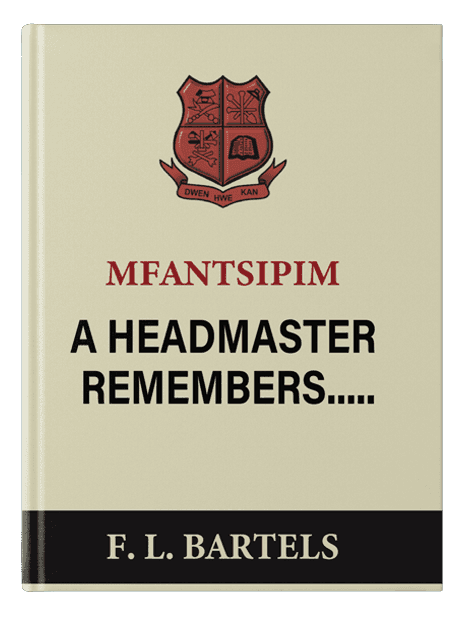
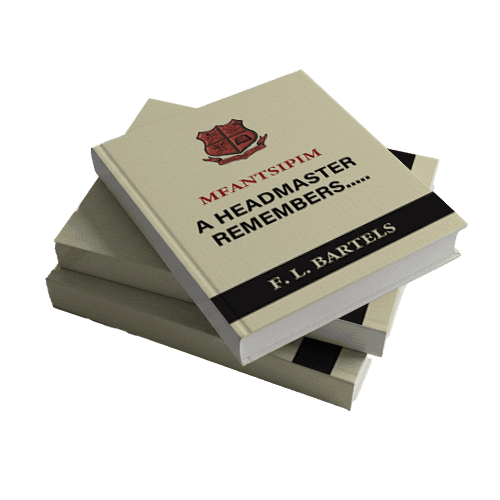
"Mfantsipim: A Headmaster Remembers" is a powerful memoir by Francis Lodowic Bartels, the first African headmaster of Mfantsipim School. Blending personal insight with institutional history, the book traces the legacy of one of Ghana's most iconic schools, from its missionary roots to its transformation into a symbol of Africa-led education, character, and nation-building.
"Mfantsipim: A Headmaster Remembers" is a powerful memoir by Francis Lodowic Bartels, the first African headmaster of Mfantsipim School. Blending personal insight with institutional history, the book traces the legacy of one of Ghana's most iconic schools, from its missionary roots to its transformation into a symbol of Africa-led education, character, and nation-building.
"Mfantsipim: A Headmaster Remembers" is a powerful memoir by Francis Lodowic Bartels, the first African headmaster of Mfantsipim School. Blending personal insight with institutional history, the book traces the legacy of one of Ghana's most iconic schools, from its missionary roots to its transformation into a symbol of Africa-led education, character, and nation-building.
Key Themes of The Book
Within 'Mfantsipim: A Headmaster Remembers, F.L. Bartels delves into fundamental principles and pivotal moments that shaped a nation. Explore the core themes covered in this essential memoir
Key Themes of The Book
Within 'Mfantsipim: A Headmaster Remembers, F.L. Bartels delves into fundamental principles and pivotal moments that shaped a nation. Explore the core themes covered in this essential memoir
Key Themes of The Book
Within 'Mfantsipim: A Headmaster Remembers, F.L. Bartels delves into fundamental principles and pivotal moments that shaped a nation. Explore the core themes covered in this essential memoir
Key Themes of The Book
Within 'Mfantsipim: A Headmaster Remembers, F.L. Bartels delves into fundamental principles and pivotal moments that shaped a nation. Explore the core themes covered in this essential memoir
Origins & Philosophy
Founded 1876, Mfantsipim was envisioned as the soul of the people'-a national beacon for holistic education.
Origins & Philosophy
Founded 1876, Mfantsipim was envisioned as the soul of the people'-a national beacon for holistic education.
Origins & Philosophy
Founded 1876, Mfantsipim was envisioned as the soul of the people'-a national beacon for holistic education.
Colonial To African Leadership
From colonial to African leadership: Mfantsipim's transformation, landmark figures, and Bartels' pivotal WWII headship.
Colonial To African Leadership
From colonial to African leadership: Mfantsipim's transformation, landmark figures, and Bartels' pivotal WWII headship.
Colonial To African Leadership
From colonial to African leadership: Mfantsipim's transformation, landmark figures, and Bartels' pivotal WWII headship.
Institutional Resilience
Mfantsipim's resilience: from 'The Faithful Eight' to Kwabotwe Hill, a testament to perseverance, community, and visionary leadership amidst decades of challenges.
Institutional Resilience
Mfantsipim's resilience: from 'The Faithful Eight' to Kwabotwe Hill, a testament to perseverance, community, and visionary leadership amidst decades of challenges.
Institutional Resilience
Mfantsipim's resilience: from 'The Faithful Eight' to Kwabotwe Hill, a testament to perseverance, community, and visionary leadership amidst decades of challenges.
Educational Vision
Bartels examines Mfantsipim's fusion of African values and academic rigor, emphasizing its role in national development and leadership, often challenging state education policy.
Educational Vision
Bartels examines Mfantsipim's fusion of African values and academic rigor, emphasizing its role in national development and leadership, often challenging state education policy.
Educational Vision
Bartels examines Mfantsipim's fusion of African values and academic rigor, emphasizing its role in national development and leadership, often challenging state education policy.
Leadership & Legacy
Bartels' leadership insights cover reforms, student life, and pivotal acts like withdrawing from Empire Day, embodying national assertion and educational integrity.
Leadership & Legacy
Bartels' leadership insights cover reforms, student life, and pivotal acts like withdrawing from Empire Day, embodying national assertion and educational integrity.
Leadership & Legacy
Bartels' leadership insights cover reforms, student life, and pivotal acts like withdrawing from Empire Day, embodying national assertion and educational integrity.
Cultural Identity
The school's motto "Dwen Hwe Kan" (Think and Look Ahead), its crest, and its adoption of Fante as symbolic anchors demonstrate its commitment to Ghanaian identity and pride.
Cultural Identity
The school's motto "Dwen Hwe Kan" (Think and Look Ahead), its crest, and its adoption of Fante as symbolic anchors demonstrate its commitment to Ghanaian identity and pride.
Cultural Identity
The school's motto "Dwen Hwe Kan" (Think and Look Ahead), its crest, and its adoption of Fante as symbolic anchors demonstrate its commitment to Ghanaian identity and pride.
Get Your Copy Now
Get Your Copy Now
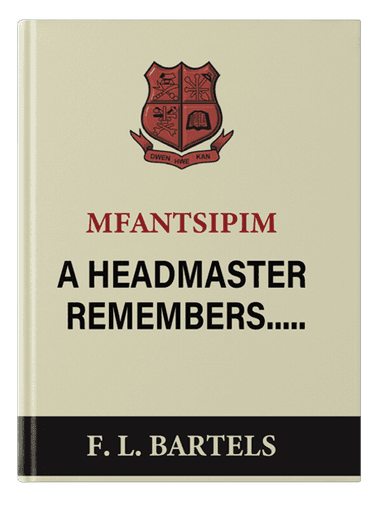
This powerful memoir by F.L. Bartels captures the spirit, struggles, and triumphs of Mfantsipim's first African Headmaster. A must-have for anyone who values leadership, education, and history.
This powerful memoir by F.L. Bartels captures the spirit, struggles, and triumphs of Mfantsipim's first African Headmaster. A must-have for anyone who values leadership, education, and history.




Back To Top
GET IN TOUCH
For any inquiries, please do not hesitate to contact us.
MOBA Secretariat
+233(0) 50 318 6258
MOBA Secretariat
+233(0) 50 318 6258